Don't miss our the funny shirts in our shop!
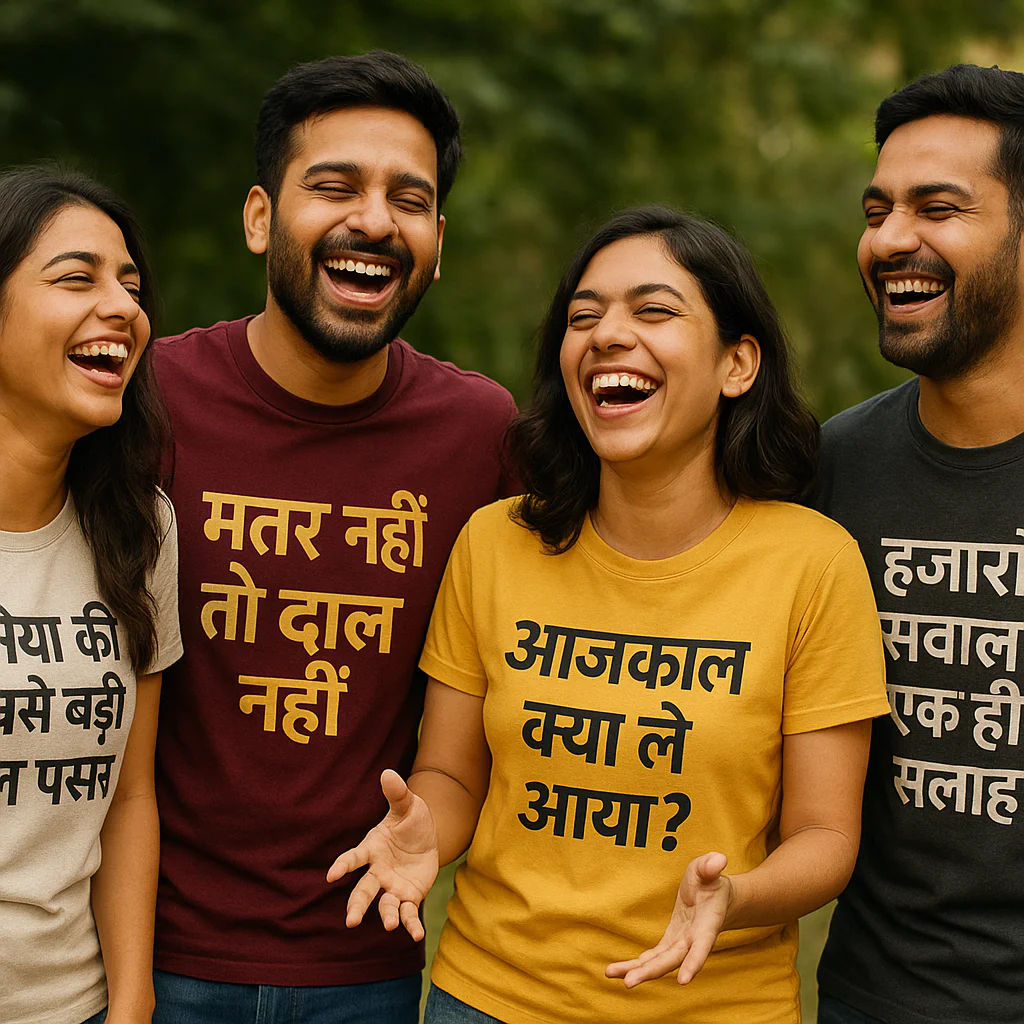
101 Funny Questions in Hindi to Make Everyone Laugh 😂

The best funy questions in Hindi are short, easy to understand, and playful enough that everyone can join in without feeling targeted. Try one about Monday, a mysteriously vanishing sock, or a phone that knows too much—and let the answers get sillier from there.
At Hilarious Shirt™, we love jokes that work both in conversation and on a T-shirt. One question that reliably gets people talking: “अगर तुम्हारा तकिया बोल सकता, तो तुम्हारे बारे में क्या बताता?” The answers can be hilarious, and wonderfully revealing about everyone’s bedtime habits.
Key Takeaways
- Pick a format for the moment: use a quick one-liner for a chat, a riddle for a game, or an open-ended question for an icebreaker.
- Choose questions that include everyone: jokes about everyday situations are safer than jokes about someone’s body, identity, money, or private life.
- Match the script to your audience: write in Devanagari, Roman Hindi, or Hinglish depending on what your group reads comfortably.
- Give punchlines room to land: ask clearly, pause, and let people answer before revealing a riddle’s solution.
- For a funny shirt, keep it short: a readable line with one clear twist beats a crowded design full of competing jokes.
Table of Contents
- ⚡️ Quick Tips and Facts About Funny Questions in Hindi
- 📚 Funny Hindi Questions: Background, Wordplay, and Humor
- 😂 101 Funny Questions in Hindi to Make Everyone Laugh
- 😄 Funny Questions to Ask Friends
- 🏫 Funny Questions for School and Classroom
- 👨 👩 👧 👦 Funny Questions for Family
- 💘 Funny Questions for Couples
- 🧒 Funny Questions for Kids
- 🧠 Funny Hindi Riddles and Tricky Questions
- 🤪 Sily Questions With Unexpected Answers
- 🗣️ Funny Questions in Hindi and English
- ✍️ Hindi Questions in Devanagari Script
- 🔤 Funny Hindi Questions in Roman Hindi
- 🌍 Hindi-English Mix Questions
- 🎉 Funny Questions for Parties, Games, and Icebreakers
- 🎲 Questions for Truth or Dare
- 🧊 Funny Icebreaker Questions
- 📱 Questions for WhatsApp and Social Media
- 💬 Funny Questions With Answers
- ✅ Short Questions and Punchline Answers
- 🧩 Riddles With Funny Answers
- 🎭 How to Ask Funny Questions Without Making Anyone Uncomfortable
- 💡 How to Create Your Own Funny Questions in Hindi
- 🎤 Tips for Better Timing and Bigger Laughs
- 🚫 Questions and Topics to Avoid
- 🏁 Conclusion
- 🔗 Recommended Links
- ❓ FAQ About Funny Questions in Hindi
- 📖 Reference Links
Quick Tips and Facts About Funny Questions in Hindi
For more question prompts and conversation starters, see our funy questions collection. At Hilarious Shirt™, we design jokes to work on shirts as well as in conversations: the best funny Hindi question is short, easy to understand, and kind enough that everyone can laugh—including the person answering it. 😄
| Quick fact | Helpful takeaway |
|---|---|
| “Funny questions in Hindi” can mean jokes, riddles, icebreakers, or playful conversation prompts. | Choose a format to fit the moment: a quick one-liner for a T-shirt, a riddle for a game, or an open question for a group chat. |
| Hindi can be written in Devanagari or Roman script. | Use Devanagari for a Hindi-first audience; use Roman Hindi when your friends commonly text that way. |
| A question often gets its laugh from an unexpected answer. | Keep the setup simple and leave a beat before the punchline. |
| Humor depends on context and audience. | Skip questions that target someone’s body, identity, finances, relationships, or private life. |
| A shirt slogan needs to read quickly. | Aim for a short line with a clear visual or verbal twist. |
Five quick starters
- अगर आलस एक नौकरी होती, तो तुम किस पद पर होते?
If laziness were a job, what would your position be? - फ्रिज खोलकर जब कुछ नहीं मिलता, तो हम उसे फिर से क्यों खोलते हैं?
Why do we open the fridge again when we already know there’s nothing new inside? - अगर तुम्हारा तकिया बोल सकता, तो तुम्हारे बारे में क्या बताता?
If your pillow could talk, what would it reveal about you? - चाय की प्याली खाली हो जाए, तो बातचीत भी खत्म हो जाती है क्या?
When the tea cup is empty, does the conversation end too? - अगर सोमवार इंसान होता, तो उससे क्या शिकायत करते?
If Monday were a person, what would you complain about?
These prompts are playful rather than personal. That distinction matters: the joke should be the situation, not someone’s vulnerability. For more lighthearted humor and conversation ideas, browse our Comedy Corner and Daily Chuckles.
Funny Hindi Questions: Background, Wordplay, and Humor
Hindi humor travels through many forms: पहेलियाँ (riddles), शब्द-खेल (wordplay), चुटकुले (jokes), and everyday observations. A question might be funny because its answer is surprising, because it takes a familiar habit to an absurd extreme, or simply because the speaker delivers it with a perfectly serious face.
Hindi also lives comfortably in more than one script. The Unicode Consortium’s Devanagari resources document the script used for Hindi and other languages, while Roman Hindi is common informal digital conversation. Neither format is automatically funier; readability for your audience is the deciding factor.
Why question jokes work
Most funny questions use one or more of these ingredients:
| Humor ingredient | How it works | Example |
|---|---|---|
| Recognition | The audience recognizes a familiar habit. | “फ्रिज में कुछ नया आया है क्या?” |
| Surprise | The answer breaks the expectation. | “मेरी डाइट का सबसे पक्का हिस्सा? कल से शुरू करना।” |
| Exaggeration | A small problem becomes hilariously dramatic. | “सोमवार इतना लंबा क्यों लगता है—क्या वह रास्ता भटक गया?” |
| Wordplay | A word or phrase has more than one possible meaning. | A riddle built around a familiar object or expression. |
| Delivery | A pause or deadpan face makes a simple line land. | Ask the question as if it were a serious scientific inquiry. |
Humor is personal, and what delights one group may confuse another. The American Psychological Association’s overview of humor discusses humor as a social and psychological experience; in practice, that means you should read the room instead of assuming every joke works for everyone.
A note online riddle collections
Pinterest pages can be useful for discovering visual inspiration, but the provided Pinterest page summaries do not contain verified question lists or answer explanations. Treat them as discovery boards, not as authoritative sources for a riddle’s wording or solution. For example, the linked Pinterest pin about Hindi reasoning questions and riddles displays a consent notice in the available page summary rather than the riddle content itself.
101 Funny Questions in Hindi to Make Everyone Laugh
Here are 101 original, lighthearted prompts for friends, family, parties, classroom warm-ups, messages, or T-shirt brainstorming. Answers are intentionally open unless the question is clearly a riddle. Ask the question, pause, and let the other person create the punchline.
Funny Questions to Ask Friends
- अगर आलस ओलंपिक खेल होता, तो तुम्हें कौन-सा मेडल मिलता?
- तुम्हारा फोन तुम्हारी आदतों पर किताब लिखे, तो उसका नाम क्या होगा?
- अगर तुम्हारी नींद का कोई मैनेजर होता, तो वह तुम्हें छुट्टी क्यों नहीं देता?
- तुम्हारी सबसे बेकार लेकिन गर्व वाली प्रतिभा क्या है?
- अगर तुम्हें एक दिन के लिए अदृश्य होने का मौका मिले, तो सबसे पहले कहाँ जाओगे—रसोई या बिस्तर?
- तुमने कभी किसी चीज़ को ढूँढ़ते-ढूँढ़ते उसी चीज़ को हाथ में पकड़ा है?
- अगर तुम्हारी अलमारी बोलती, तो वह किस कपड़े की शिकायत करती?
- तुम्हारे जीवन का सबसे छोटा लेकिन सबसे बड़ा ड्रामा क्या है?
- अगर बहाने बनाने की प्रतियोगिता हो, तो तुम्हारा गोल्ड मेडल वाला बहाना क्या होगा?
- तुम्हें एक दिन के लिए अपने पालतू जानवर की भाषा समझ आए, तो सबसे पहले क्या पूछोगे?
- अगर तुम्हारी हँसी का कोई नाम होता, तो क्या होता?
- तुम्हारी कौन-सी आदत तुम्हें खुद भी समझ नहीं आती?
- अगर चप्पलें भाग सकतीं, तो तुम्हारी चप्पल सबसे पहले कहाँ जाती?
- तुम्हारे फोन की बैटरी तुम्हारे मूड से कितनी मिलती-जुलती है?
- अगर नाश्ता बोल सकता, तो वह तुम्हें रोज़ क्या सलाह देता?
Funny Questions for School and Classroom
- अगर होमवर्क इंसान होता, तो उसे छुट्टी पर कहाँ भेजते?
- पेंसिल की नोक टूटने पर सबसे ज़्यादा दुख किसे होता है—पेंसिल को या विद्यार्थी को?
- अगर ब्लैकबोर्ड पर लिखे सवाल खुद जवाब दे सकें, तो क्षा कितनी जल्दी खत्म होगी?
- कौन-सा विषय छुट्टी के दिन भी तुम्हारे सपने में आ सकता है?
- अगर स्कूल की घंटी बोलती, तो वह “छुट्टी” कब कहती?
- तुम्हारी किताबों में सबसे ज़्यादा आराम कौन-सी किताब करती है?
- अगर परीक्षा में केवल एक सवाल हो, तो तुम किस विषय की दुआ करोगे?
- क्षा में सबसे तेज़ कौन दौड़ता है—विद्यार्थी या छुट्टी की खबर?
- अगर रबर गलतियाँ मिटाने के बजाय उन्हें याद रखता, तो क्या कहता?
- कौन-सा स्कूल का सामान सबसे ज़्यादा काम करता है, पर कभी शिकायत नहीं करता?
Keep classroom humor inclusive. A joke about homework or a mysteriously vanishing pen is safer than teasing a student or teacher personally. For more playful culture and humor, visit Comedy Culture.
Funny Questions for Family
- घर में रिमोट सबसे ज़्यादा किसकी जेब में छुट्टी मनाता है?
- अगर घर की चाय परिवार की बैठक बुलाए, तो पहला मुद्दा क्या होगा?
- कौन-सी चीज़ घर में सब ढूँढ़ते हैं, लेकिन कोई वापस सही जगह नहीं रखता?
- अगर घर का पंखा बोल सकता, तो वह किसकी कहानी सबसे पहले सुनाता?
- परिवार में “बस पाँच मिनट” कहकर सबसे देर कौन करता है?
- अगर खाने की मेज़ पर सबकी पसंद बोलती, तो कौन सबसे ज़ोर से बोलता?
- घर की सबसे रहस्यमयी जगह कौन-सी है—फ्रिज, अलमारी या वह दराज़ जिसमें सब कुछ मिलता है?
- अगर परिवार का कोई सदस्य रसोई का राजा हो, तो उसकी सबसे बड़ी ताकत क्या है?
- घर में सबसे जल्दी किसकी आवाज़ सुनाई देती है—प्रेशर कुकर की या किसी की पुकार की?
- अगर घर के पौधे परिवार के बारे में कहानी लिखें, तो उसका शीर्षक क्या होगा?
Funny Questions for Couples
- अगर हमारी पहली मुलाकात पर कोई फिल्म बने, तो उसका नाम क्या होगा?
- हम दोनों में से कौन “मैं तैयार हूँ” कहकर सबसे देर से तैयार होता है?
- अगर हमारी बहस का रेफरी एक बिल्ली हो, तो वह किसे सही मानेगी?
- मेरी कौन-सी छोटी आदत तुम्हें चुपके से हँसा देती है?
- अगर हम एक दिन के लिए अदला-बदली कर लें, तो तुम्हें सबसे पहले क्या अजीब लगेगा?
- हमारी जोड़ी का सुपरपावर क्या है—खाना ढूँढ़ना, प्लान बदलना, या एक-दूसरे को चिढ़ाना?
- अगर हमारी डेट का बजट सिर्फ़ कल्पना में हो, तो कहाँ जाएँगे?
- कौन-सा गाना हमारी रोज़मर्रा की ज़िंदगी का बैकग्राउंड म्यूज़िक होगा?
- अगर हमारे घर की चीज़ें हमें रेट करें, तो कौन-सी चीज़ सबसे ज़्यादा स्टार देगी?
- हम दोनों में से कौन पहले कहेगा, “चलो बस एक एपिसोड और”?
For couples, keep the joke affectionate. A funny question invites a shared laugh; it shouldn’t disguise a serious complaint or pressure someone to reveal something private.
Funny Questions for Kids
- अगर तुम्हारा खिलौना स्कूल जाए, तो उसे कौन-सा विषय सबसे अच्छा लगेगा?
- अगर केला बोल सकता, तो छिलका उतारने से पहले क्या कहता?
- तुम्हारा बैग जादू से बोलने लगे, तो उसमें कौन-सी चीज़ सबसे पहले शिकायत करेगी?
- अगर बादल तुम्हारी बात मानें, तो आज कौन-सी आकृति बनाएँगे?
- अगर तुम्हारी परछाईं छुट्टी माँगे, तो तुम उसे कहाँ भेजोगे?
- कौन-सा जानवर सबसे अच्छा प्रधानाचार्य बनेगा?
- अगर चाँद को नाश्ता चाहिए, तो वह क्या माँगेगा?
- अगर तुम्हें एक नया त्योहार बनाना हो, तो उसका नाम और मज़ेदार नियम क्या होंगे?
- तुम्हारी पसंदीदा सब्ज़ी सुपरहीरो बन जाए, तो उसका नाम क्या होगा?
- अगर तुम्हारे जूते बोल सकें, तो वे तुम्हें कहाँ घूमने ले जाना चाहेंगे?
Choose age-appropriate prompts and let children skip any question they don’t want to answer. For activity ideas and cheerful trivia, see Fun Facts.
Funny Hindi Riddles and Tricky Questions
- ऐसी कौन-सी चीज़ है जो जितनी सूखती है, उतनी ही गीली होती जाती है?
उत्तर: तौलिया। - ऐसी कौन-सी चीज़ है जिसके दाँत हैं, लेकिन वह काटती नहीं?
उत्तर: कंघी। - वह क्या है जो आपका है, लेकिन दूसरे लोग आपसे ज़्यादा इस्तेमाल करते हैं?
उत्तर: आपका नाम। - ऐसी कौन-सी चीज़ है जो टूटती है, लेकिन आवाज़ नहीं करती?
उत्तर: वादा—कम से कम टूटने से पहले! 🙂 - कौन-सी चीज़ ऊपर जाती है, लेकिन नीचे नहीं आती?
उत्तर: उम्र। - ऐसा कौन-सा कमरा है जिसमें दरवाज़ा और खिड़की नहीं होती?
उत्तर: मशरूम—अंग्रेज़ी में mushroom शब्द का मज़ेदार शब्द-खेल। यह हिंदी का शाब्दिक जवाब नहीं, बल्कि मिश्रित-भाषा वाली पहेली है। - एक चीज़ काली खरीदी जाती है, जलाने पर लाल होती है, और राख होने पर धूसर—वह क्या है?
उत्तर: कोयला। - किस चीज़ को मुफ्त में दो बार पाते हैं, लेकिन तीसरी बार लेने के लिए पैसे देने पड़ते हैं?
उत्तर: दाँत—बच्चे के दूध के दाँत गिरते हैं, स्थायी दाँत आते हैं, और फिर तीसरी बार नकली दाँतों पर खर्च हो सकता है। यह एक मज़ाकिया पहेली है, वैज्ञानिक नियम नहीं। - कौन-सी चीज़ आधी अंदर हो तो चुभती है, पूरी अंदर हो तो काम करती है?
उत्तर: दीवार में ठीक से ठोकी गई कील। शब्दों को साफ़ रखें: यह वस्तु और काम की स्थिति पर आधारित पहेली है, किसी व्यक्ति के शरीर पर नहीं। - ऐसी कौन-सी चीज़ है जो चाबी से खुलती है, लेकिन ताले से नहीं?
उत्तर: पियानो—चाबी यहाँ संगीत की कुंजी/की-बोर्ड की कुंजी के अर्थ में है। हिंदी में इसे समझाने के लिए “की” वाला शब्द-खेल कहें।
Riddle answers can vary with wording and language. If a solution depends on English vocabulary, say so instead of presenting it as a literal Hindi answer. The featured street-interview video uses a similar playful format: it asks Hindi riddles, including the charcoal and teeth puzzles, then reveals answers after the participants think aloud. Treat it as entertainment, not as a source for universal or scientifically precise answers.
Sily Questions With Unexpected Answers
- अगर सोमवार को छुट्टी चाहिए, तो आवेदन किसे देंगे—कैलेंडर को या अलार्म को?
- फ्रिज का दरवाज़ा बंद करते ही खाना अंदर अकेला तो नहीं पड़ जाता?
- अगर तकिया सपने देखता है, तो उसे किस तरफ़ करवट पसंद होगी?
- घड़ी हमेशा चलती रहती है, फिर उसे आराम कौन देता है?
- अगर छाता बारिश से बचाता है, तो उसे धूप में कौन बचाता है?
- किताब बंद होने पर उसकी कहानी कहाँ चली जाती है?
- अगर मोज़े कपड़े की दराज़ में दोस्त बनाते हैं, तो दूसरा मोज़ा कहाँ चला जाता है?
- पानी की बोतल खाली हो जाए, तो क्या वह बस प्यासा महसूस करती है?
- अगर नींद इतनी अच्छी चीज़ है, तो अलार्म उससे क्यों लड़ता है?
- अगर दिमाग़ कहे “सो जाओ” और फोन कहे “एक वीडियो और,” तो अदालत किसकी सुनेगी?
- अगर कुर्सी सबका भार उठाती है, तो उसे छुट्टी कौन देता है?
- अगर चश्मा सब कुछ साफ़ दिखाता है, तो उसे अपना भविष्य दिखता है?
- अगर जूते रास्ता जानते हैं, तो वे घर लौटने पर इतने थके क्यों होते हैं?
- रसोई में चम्मच सबसे ज़्यादा किसकी बातें सुनता है?
- अगर पंखा हवा घुमाता है, तो हवा को चक्कर तो नहीं आते?
- कौन-सा काम करते हुए हम सबसे ज़्यादा कहते हैं, “बस अभी करता हूँ”?
- अगर आलू हर सब्ज़ी में फिट हो जाता है, तो क्या वह खाने का राजनयिक है?
- अगर तुम्हारी टू-डू लिस्ट बोल सकती, तो वह तुम्हें डाँटती या खुद ही छोटी हो जाती?
- चाय पहले आती है या चाय पीने का बहाना?
- अगर हर समस्या का समाधान गूगल है, तो इंटरनेट बंद होने पर किसे पूछोगे?
Funny Questions in Hindi and English
Use the version your audience can read fastest. For a Hindi-speaking family group, Devanagari may feel natural; for a mixed-language chat, Roman Hindi or a Hindi-English mix may be easier.
| Format | Example | Best suited to |
|---|---|---|
| Devanagari Hindi | अगर सोमवार छुट्टी माँगे, तो कौन मना करेगा? | Hindi-first readers, cards, classroom activities |
| Roman Hindi | Agar Monday chutti mange, toh kaun mana karega? | Informal texting and audiences who type Hindi in Latin letters |
| Hinglish | Agar Monday leave mange, toh boss calendar hoga ya alarm? | Friends who naturally mix Hindi and English |
| Hindi + translation | तुम्हारा फोन तुम्हारी कौन-सी आदत खोल देगा? (What habit would your phone expose?) | Mixed-language groups and learners |
Hindi Questions in Devanagari Script
Devanagari gives Hindi wording its usual written form. Use it when your audience is comfortable reading the script, and keep sentence structure simple.
- अगर तुम्हारा अलार्म तुम्हें रेट करे, तो कितने स्टार देगा?
- अगर चाय को छुट्टी मिले, तो नाश्ते में क्या पियोगे?
- तुम्हारी सबसे नाटकीय भूख कौन-सी होती है—हल्की या “अभी खाना चाहिए”?
- अगर तुम्हारी चप्पल बोलती, तो वह किस रास्ते से मना करती?
For accessibility, avoid decorative fonts or unusual spellings that make characters harder to recognize. The Unicode Devanagari chart is a useful reference for script characters.
Funny Hindi Questions in Roman Hindi
Roman Hindi is convenient in casual messages, but spellings vary. Pick one readable spelling and stay consistent rather than trying to enforce one “perfect” transliteration.
- Agar tumhara takiya bolta, toh tumhari kaunsi aadat bata?
- Fridge kholkar kuch na mile, toh dobara kyun kholte hain?
- Agar Monday insaan hota, toh use kya shikayat karte?
- Tumhari sabse funny aur bekaar talent kya hai?
Roman Hindi can help people who speak Hindi but read Devanagari more slowly. It can also create ambiguity, so translate any pun or riddle if the answer relies on a specific spelling.
Hindi-English Mix Questions
Hinglish works best when the group already uses it naturally. Don’t add English words simply to sound trendy; a joke’s rhythm matters more than its language ratio.
- Agar tumhara phone office manager hota, toh sabse pehle kis habit par warning deta?
- Monday ko “snoze” kar sakte, toh week kitna short hota?
- Tumhari life ka current status: loading, buffering, ya “chai please”?
- Agar fridge ka app hota, toh tumhe “nothing new inside” notification kitni baar bhejta?
For more humor and wearable wordplay, browse Fashion Funnies.
Funny Questions for Parties, Games, and Icebreakers
The right prompt can rescue a quiet room—but a forced “everyone answer now” moment can make people want to teleport into the snack table. Keep questions optional, start with low-stakes topics, and let people pass.
Questions for Truth or Dare
These are playful truth prompts, not pressure to disclose secrets. Set a “pass is fine” rule before the game starts.
- तुम्हारी सबसे मज़ेदार छोटी-सी भूल कौन-सी है?
- अगर तुम्हें एक दिन के लिए किसी जानवर की नकल करनी पड़े, तो कौन-सा जानवर चुनोगे?
- कौन-सा गाना सुनते ही तुम्हारे पैर खुद नाचने लगते हैं?
- तुम्हारा सबसे अजीब लेकिन harmless खाने का कॉम्बिनेशन क्या है?
- अगर तुम्हें अपने लिए एक बेवकूफ़ी भरा सुपरहीरो नाम चुना हो, तो क्या होगा?
- किस घरेलू काम को तुम ओलंपिक खेल बना सकते हो?
- तुमने कभी किसी को हाथ हिलाया और फिर पता चला कि वह किसी और को हाथ हिला रहा था?
- अगर तुम्हारी ज़िंदगी का एक दिन sitcom बने, तो उस एपिसोड का नाम क्या होगा?
A quick, comfortable game format
- Explain the rules: anyone may skip a question without giving a reason.
- Start with a silly, easy prompt: avoid personal or embarrassing topics.
- Keep answers brief: one sentence is enough; nobody needs to perform.
- Let the group build on answers: a follow-up can be fun, but don’t interrogate.
- Change topic if laughter turns uncomfortable: the best host protects the room, not the joke.
Funny Icebreaker Questions
For a new group, use questions that let people choose how much to share.
- अगर तुम्हें किसी रोज़मर्रा की चीज़ का आविष्कार करना हो, तो क्या बनाओगे?
- कौन-सा छोटा काम तुम्हें अजीब तरह से संतुष्ट करता है?
- अगर तुम्हारे दिन का मौसम रिपोर्ट हो, तो आज धूप है या बादल?
- तुम किस चीज़ में बेवजह आत्मविश्वासी हो?
- अगर तुम्हारा मूड कोई नाश्ता होता, तो क्या होता?
- तुम्हारे सपनों की आलसी छुट्टी कैसी दिखती है?
- कौन-सा साधारण काम तुम अपनी खास शैली में करते हो?
- अगर तुम्हें एक मज़ेदार नया त्योहार बनाना हो, तो उसका नियम क्या होगा?
Research on group interaction suggests humor can help people connect, but comfort and context matter. The APA discussion of humor offers broader context; for an icebreaker, the practical rule is simple: invite, don’t corner.
Questions for WhatsApp and Social Media
Short prompts travel well in chats because people can answer at their own pace. Add a clear invitation instead of tagging someone into a public embarrassment.
- आज का सवाल: अगर सोमवार को नया नाम देना हो, तो क्या रखोगे?
- अपनी ज़िंदगी की एक बेकार superpower बताओ।
- फ्रिज खोलने का तुम्हारा रिकॉर्ड कितनी बार है—ईमानदारी से?
- अगर तुम्हारा तकिया रिव्यू लिखे, तो कितने स्टार देगा?
- एक emoji में अपना आज का मूड बताओ, फिर उसका मज़ेदार कारण लिखो।
- तुम्हारी सबसे अनोखी “मैं इसे बाद में करूँगा” वाली चीज़ क्या है?
- इस वाक्य को पूरा करो: “मैं बस पाँच मिनट के लिए फोन देखने आया था और…”
- अगर तुम्हारे मोज़े अपना group chat चलाते, तो उसका नाम क्या होता?
When sharing, consider who can see the post and whether a person is being singled out. The FTC’s privacy guidance is a useful reminder to think before posting personal information.
Funny Questions With Answers
A question can be a conversation starter with no fixed answer, or a riddle with a punchline. Make that distinction clear so people don’t mistake a playful opinion for a “correct” answer.
Short Questions and Punchline Answers
| सवाल | मज़ेदार जवाब |
|---|---|
| डाइट कल से शुरू क्यों होती है? | क्योंकि आज की मिठाई को पहले विदा करना पड़ता है। |
| फोन की बैटरी इतनी जल्दी क्यों थकती है? | उसे भी दिन भर लोगों को संभालना पड़ता है। |
| फ्रिज बार-बार खोलने से खाना क्यों नहीं बदलता? | शायद उसने अभी तक नया रूप चुने का फैसला नहीं किया। |
| अलार्म सुबह इतना नाराज़ क्यों लगता है? | उसे पता है कि तुम “snoze” दबाने वाले हो। |
| सोमवार सप्ताह में क्यों आता है? | कैलेंडर को भी कभी-कभी विलेन चाहिए। |
| तकिया सबसे भरोसेमंद दोस्त क्यों है? | वह तुम्हारी बातें सुनता है और किसी को बताता नहीं। |
| मोज़े का एक जोड़ा हमेशा अधूरा क्यों रहता है? | एक मोज़े ने शायद अलग करियर चुन लिया। |
| चाय बातचीत की शुरुआत कैसे करती है? | पहले कप गर्म होता है, फिर चर्चा। |
These are original punchlines, not sourced quotations. Feel free to customize them for a family chat, a school-safe joke, or a T-shirt caption.
Riddles With Funny Answers
| पहेली | जवाब | क्यों काम करती है |
|---|---|---|
| ऐसी कौन-सी चीज़ है जो जितनी सूखती है, उतनी गीली होती है? | तौलिया | “सूखना” और “गीला होना” एक अप्रत्याशित जोड़ी बनाते हैं। |
| आपका कौन-सा हिस्सा आपका है, लेकिन दूसरे लोग ज़्यादा बोलते हैं? | आपका नाम | सवाल रोज़मर्रा की चीज़ को नए कोण से दिखाता है। |
| ऊपर जाती है, नीचे नहीं आती—क्या? | उम्र | छोटा, सीधा जवाब; ध्यान “ऊपर-नीचे” के अर्थ पर है। |
| दाँत हैं, पर काटती नहीं—क्या? | कंघी | वस्तु के आकार से जुड़ी परिचित पहेली। |
| काली खरीदी, लाल इस्तेमाल की, धूसर फेंकी—क्या? | कोयला | रंग बदलने का क्रम ही संकेत देता है। |
Riddles are often retold with different wording. If two people give plausible answers, ask what interpretation they used rather than declaring one person “wrong.” That’s usually more fun—and it may reveal a better punchline.
How to Ask Funny Questions Without Making Anyone Uncomfortable
Good humor gives people room to play. It doesn’t make someone defend their appearance, income, identity, relationships, or private choices. The RAIN guidance on boundaries and consent focuses on sexual consent, but its broader lesson about respecting boundaries is useful in social settings too: a person’s comfort matters more than getting answer.
The quick comfort check
Before asking, consider:
- Who is the target? Aim the joke at a shared situation, fictional character, or yourself—not a person’s sensitive trait.
- Can someone pass? Make skipping normal, not suspicious.
- Is the setting right? A question that works among close friends may not work in a classroom or workplace.
- Could the answer reveal private information? If yes, choose a lighter prompt.
- Is the joke still funny without embarrassment? If not, rewrite it.
Safer swaps
| Instead of asking… | Try asking… |
|---|---|
| A question about someone’s weight or appearance | अगर तुम्हारा मूड कोई रंग होता, तो आज कौन-सा होता? |
| A question about salary or money | अगर तुम्हें एक बेकार superpower चुनी हो, तो क्या चुनोगे? |
| A question about an ex or relationship conflict | तुम्हारी पसंदीदा fictional जोड़ी कौन-सी है और क्यों? |
| A question about a mistake someone regrets | कौन-सी छोटी गलती अब मज़ेदार कहानी बन गई है? |
| A question that pressures someone to confess | किस harmless चीज़ में तुम बेवजह competitive हो? |
If someone looks uncomfortable, don’t demand an explanation. Change the subject, acknowledge the miss, and move on. A good joke survives a rewrite; a friendship shouldn’t have to.
How to Create Your Own Funny Questions in Hindi
You don’t need a comedy-writing certificate—or a dramatically tiny notebook. Build a prompt from a familiar situation, add an unexpected angle, then read it aloud.
A five-step formula
- Choose something ordinary: phone battery, tea, homework, alarm, socks, or the fridge.
- Give it a human job or feeling: make it a manager, referee, tired traveler, or dramatic poet.
- Ask a clear question: don’t bury the joke under a long setup.
- Add a surprise: the phone is not low on battery; it is “emotionally exhausted.”
- Test the wording aloud: remove any phrase that slows the laugh or confuses the meaning.
Example:
- Ordinary object: alarm
- Human role: strict manager
- Question: अगर अलार्म तुम्हारा मैनेजर होता, तो रोज़ सुबह तुम्हें कौन-सी warning देता?
- Punchline possibility: “पाँचवीं बार snoze किया तो छुट्टी कटेगी!”
Turn everyday observations into prompts
| Everyday moment | Question-building angle | Sample |
|---|---|---|
| Checking the fridge again | Pretend the fridge can judge the habit | फ्रिज तुम्हें देखकर क्या सोचता होगा? |
| Losing one sock | Imagine the sock chose a new life | गुम हुआ मोज़ा किस करियर में गया होगा? |
| Saying “five minutes” | Treat time as a suspicious witness | तुम्हारे पाँच मिनट घड़ी में कितने मिनट होते हैं? |
| Delaying a task | Give the to-do list a voice | तुम्हारी to-do list आज तुम्हें क्या जवाब देगी? |
| Drinking tea | Make tea the host of a talk show | चाय की पहली चुस्की के बाद अगला सवाल कौन पूछता है? |
Make it work on a funny shirt
A conversation question can be long; a shirt slogan should be short enough to read at a glance. Try these design checks:
- Keep the phrase brief and high-contrast.
- Make the meaning clear without needing a paragraph of explanation.
- Check spelling in Devanagari or Roman Hindi carefully.
- Avoid tiny type, especially for long lines.
- Test the layout at a real viewing distance.
- Ask someone outside your immediate friend group what they think it means.
For more wearable humor and style inspiration, explore Fashion Funnies and our Comedy Corner. A shirt line that makes one friend chuckle but leaves everyone else puzzled may still work as an inside joke—just know which kind you’re designing.
Tips for Better Timing and Bigger Laughs
A joke’s wording matters, but so do timing, delivery, and audience. At Hilarious Shirt™, we’ve found the same principle applies to slogans: the joke needs enough room to land. Put five competing ideas one shirt and the main punchline gets lost in the crowd.
Use this delivery sequence
- Set the scene: give only the context the listener needs.
- Ask the question clearly: don’t rush or mumble the setup.
- Pause: let people think, especially with riddles.
- Allow answer: the audience may produce something funier than your planned punchline.
- Reveal the answer gently: if it’s a riddle, explain the wordplay when needed.
- Move on if it misses: repeating a joke rarely makes it less awkward.
Quick timing guide
| Situation | Best approach |
|---|---|
| Group chat | Keep the question short; let people reply when ready. |
| Party icebreaker | Ask one question at a time and model a brief answer yourself. |
| Riddle | Pause long enough for a guess; offer a hint before revealing the answer. |
| T-shirt slogan | Make the central joke readable from a short distance. |
| Classroom or workplace | Use non-personal, low-stakes humor and make participation optional. |
Don’t confuse volume with confidence. A quiet, deadpan question can be funier than a shouted one. For more laughter-friendly ideas, visit Daily Chuckles and Comedy Culture.
Questions and Topics to Avoid
Funny questions work best when people can answer freely. Avoid prompts that put someone on the spot about:
- Body size, appearance, disability, or health
- Religion, caste, race, nationality, gender, or sexuality
- Income, debt, housing, or family hardship
- Romantic history, fertility, marriage pressure, or private relationships
- Trauma, grief, addiction, or medical experiences
- Workplace performance, academic struggles, or personal mistakes in front of a group
- Sexual details or anything that relies on pressure, deception, or humiliation
The United Nations guidance on human rights offers a broad framework for treating people with dignity. For everyday humor, a practical rule is even simpler: punch up at absurd situations, not down at someone who can’t comfortably push back.
When a question goes wrong
- Stop the joke rather than asking the person to explain why it hurt.
- Apologize plainly: “That was too personal. I’m sorry.”
- Don’t add “I was only joking” as a way to dismiss the impact.
- Change direction and give the other person space.
- Learn from it: rewrite the prompt so the humor targets the situation instead.
The biggest laugh isn’t always the best outcome. The better question is: did the group enjoy the joke together, or did one person have to pay for it?